
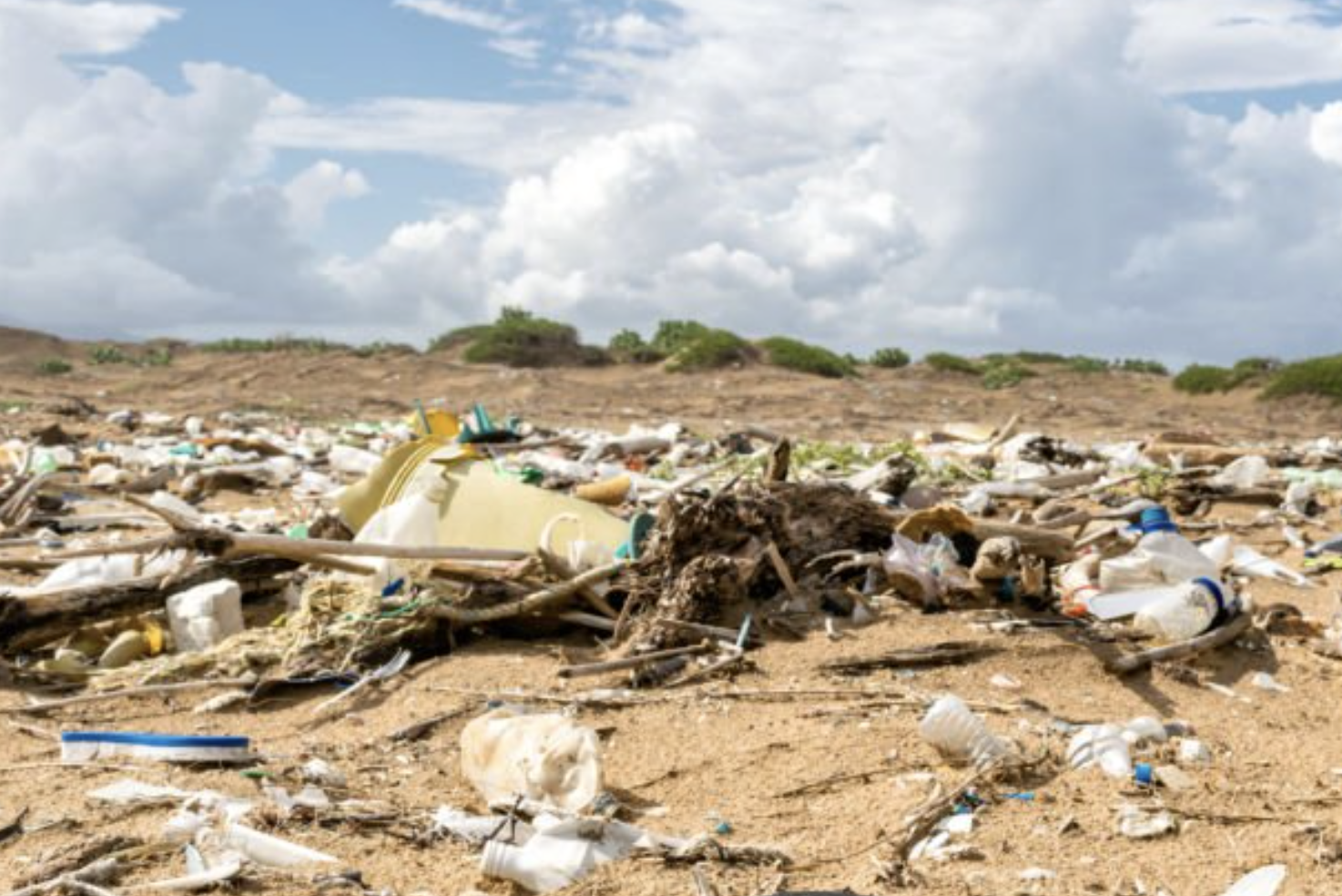
In 2016, Antigua and Barbuda championed the regional and global call for a ban on plastic bags, achieving early reductions in landfill waste on the island, but a new report has suggested that this early momentum has lacked the systematic monitoring needed to measure its long-term effectiveness.
The Caribbean Policy Research Institute (CAPRI) launched its report “The Bag Ban Theory: Unpacking Evidence and Capacity Gaps in Caribbean Plastic Policies” last week, revealing that while Antigua and Barbuda led the region with its 2016 ban, significant implementation challenges remain nine years later.
The study found that plastic in the country’s landfills dropped from 20 percent in 2006 to 4 percent in 2017.
However, researchers noted most of that decline occurred before the ban took effect, raising questions about how much credit the policy deserves for the improvement.
“None of the jurisdictions established baseline indicators for their stated or inferred objectives, nor were monitoring mechanisms incorporated into the policy design,” said Dominique Augustine, CAPRI’s lead researcher on the project. “Consequently, assessments are limited to fragmented administrative records, ad hoc studies, retailer self-reports, and cleanup data.”
The report examined plastic bag bans in three Caribbean countries: Antigua and Barbuda, Barbados, and Jamaica.
All three introduced measures between 2016 and 2019 with shared aims of reducing single-use plastic circulation, protecting marine ecosystems, and safeguarding public health.
Antigua and Barbuda became the first Caribbean nation to prohibit the importation, distribution, sale, and use of shopping bags made from polyethylene and petroleum-based plastics.
The ban was phased in during 2016, with imports restricted in January, sales banned in major supermarkets from July, and smaller shops included from October.
The government supported the transition by distributing approximately 120,000 reusable bags and launching a garment manufacturing training programme to promote locally made alternatives.
Public awareness campaigns appeared effective, with surveys showing over 70 percent of respondents reporting increased awareness of the ban.
Customs authorities confiscated over 1,000 tonnes of plastic in 2018. However, no systematic data on enforcement or compliance have been published since then.
Indira James-Henry, General Manager of the National Solid Waste Management Authority in Antigua and Barbuda, acknowledged the monitoring gaps during the report’s launch event.
During a panel discussion, she explained that while data was collected initially, maintaining continuous monitoring has proven difficult.
“Antigua and Barbuda is very much aware that we’re lacking that aspect, and we need continuity in following up and ensuring that monitoring and control continues to happen, and also data collection,” James-Henry said. “But as in government, as it goes throughout the region, human resource capacity is limited.”
She noted that even when other government departments are designated for data collection and monitoring, plastics oversight may not rank high on their priority lists.
James-Henry emphasized that each department may need embedded monitoring and data collection units to track policies effectively.
Augustine pointed out that during the research process, interviews with enforcement agencies revealed checks were conducted on an ad hoc basis without proper documentation.
“That was alarming in and of itself because if there is no data on that then we’re not entirely sure what measures to take in terms of enforcement,” she said.
The report found enforcement remained uneven across the country.
While Customs can block imports of banned plastics at ports, inland monitoring of smaller retailers is weaker. Larger supermarkets complied readily with the ban, but smaller operators have been slower to adapt and continue distributing banned bags in some cases.
Despite these challenges, Antigua and Barbuda gained international recognition for its efforts.
The country ranked as the world’s lowest emitter of ocean plastics in 2022 according to the Environmental Performance Index, with a score of 83.7.
The study also examined health indicators such as dengue incidence, which the ban aimed to reduce by eliminating standing water in discarded bags.
However, dengue cases fluctuated dramatically over the period studied, spiking to 1,344 per 100,000 in 2019 before falling to 52 per 100,000 in 2022.
Researchers concluded these variations were more likely driven by rainfall patterns and public health interventions than by the plastic ban.
Marine fisheries production remained relatively steady before and after the ban, showing no observable changes that could be attributed to the policy.
The CAPRI report makes several recommendations for strengthening plastic bag bans across the region.
It calls for ministries responsible for environment and trade to require quarterly reports from importers and manufacturers on the volumes and types of plastics placed on the market.
National solid waste management authorities should conduct biennial waste characterization studies disaggregated by product type and publish results to track progress, the report states.
The study also recommends that national standards institutions adopt internationally recognized technical standards for biodegradable and compostable plastics, with mandatory independent testing before alternatives are approved for sale.
Customs agencies should expand container inspections to block prohibited plastics from entering, while environmental agencies should increase random spot checks of retailers and informal markets, publishing annual compliance reports.
James-Henry emphasized the importance of regional coordination, noting that Caribbean countries participating in international plastic treaty negotiations could form a steering committee to share knowledge and best practices.
“We need to form a steering committee that can be through persons that go to the plastic treaties and so forth but passing down that knowledge back home so that things that are happening we can educate and inform as to developments and changes that can be made,” she said.
The report acknowledges that achieving meaningful reductions in plastic pollution will require sustained enforcement, systematic data collection, and stronger regulation of alternatives.
Without these elements, researchers warn that bans risk remaining largely symbolic despite good intentions.
Augustine concluded that while political will exists across the Caribbean to address plastic pollution, governments must invest in the capacity to monitor, enforce, and evaluate these policies. “Policy without data is just good intention,” she said. “And we can do better than that.”
The full report is available at the Caribbean Policy Research Institute’s website.